ESSEC LUXE Conference – January 29, 2025
As part of the ESSEC LUXE club, I had the pleasure of co-hosting, alongside Aurélie Desombre, a fascinating roundtable discussion on a key topic in the luxury sector : “Innovation in the Service of Creation.” Four distinguished guests, each with highly complementary experiences, honored us by sharing their vision and insights : Pierre-François Le Louët, Marc Bayard, Alexandre Echasseriau, and Romain Moyse.


Introduction by Pierre-François LE LOUËT – NELLY RODI
Pierre-François Le Louët has been the CEO of NELLY RODI since 2003 and continuously evolves this trend forecasting agency with a strong focus on aesthetic trends. NELLY RODI is a true strategic consulting firm specializing in the creative industries sector. The agency operates in about ten countries, with offices in China and the U.S. Additionally, P.F. Le Louët is actively involved in numerous professional organizations, bringing his expertise and vision to support the development of the creative industries.
To introduce the topic, Pierre-François Le Louët referenced Emmanuel Kant (with his Table of Categories) and the three fundamental questions to ask regarding the relationship between two elements — in this case, innovation and creation : “Is it possible ? Does it exist ? Is it necessary ?”
Innovation can be both technological and non-technological. It involves material innovation, process innovation (industrial, artisanal, and digital). There are two schools of thought : many luxury houses wish to remain in the “long-term” approach and do not want innovation to be visible. Others, on the contrary, believe that innovation should be present as it enables new creative gestures.
Innovation is omnipresent because creation constantly regenerates itself through new processes, enriching creative approaches and those of luxury houses. Innovation is necessary to address climate challenges. Without significant work on materials, the economy will not achieve its carbon footprint reduction goals. Innovation is also essential to meet the expectations of new generations. The work environment and tools must evolve to adapt to the contemporary world. Finally, innovation will always be necessary because there is a genuine appetite for novelty. It is particularly relevant as AI disrupts the creative landscape, requiring three forms of intelligence to coexist : artificial intelligence, our intelligence, and manual intelligence. These three must function optimally together, all in the service of creation.


Intervention by Marc BAYARD – MANUFACTURES NATIONALES
Marc Bayard is Director of Research and Innovation at the Mobilier National. He has curated numerous contemporary artists, including Eva Jospin, Pierre et Gilles, Sheila Hicks, Jean-Charles de Castelbajac, and Harry Nuriev. He holds a PhD in Art History (EHESS), was a resident at the Villa Medici, and served as Head of the Art History Department there. He was also a member of the Minister of Culture Frédéric Mitterrand’s cabinet. He is the author of “Design du pouvoir”, “L’Atelier de Recherche et de Création du Mobilier National” (2016), and “Slow-Made: Manifeste du geste humain” (2022).
The Mobilier National is a unique institution in the world : 650 people work there following its merger with the Sèvres Manufactures, half of whom are master artisans dedicated to furniture, French taste, and a distinctive way of life. Its mission is to renovate, manufacture, and acquire furniture, emphasizing long-term vision. Marc Bayard explains that the Mobilier National functions like a body with two legs : one turned towards the past (collections, restoration workshops, ancestral gestures) and the other towards contemporary creation. It brings the past to life in the present (through exhibitions, visits, etc.) while acting in the present to shape the future, with a perspective of utility.
The key challenge is the virtuality of our exchanges and lives. Yet, reality also imposes itself : there must be an alignment between virtuality and reality. AI-generated designs today do not incorporate materiality and craftsmanship. The real challenge is transitioning from innovation to the reality of manual skill, the dialogue between the desire for imagination and materiality. Investing in AI is essential, but it must ultimately lead to tangible production.
Innovation at the Mobilier National is embodied in the creation of the “Sustainable Practices Laboratory,” aimed at fostering the development of new materials for scalable production, color research, and more.
According to Marc Bayard, luxury still thrives today because there is a strong desire for the real (the tangible). The more we move toward the virtual, the stronger the desire for the real will be. Why has the Mobilier National endured for over four centuries ? Because it has successfully built its narrative. Innovation serves memory (as seen in the five-year restoration of Notre-Dame de Paris), prestige (such as the creation of a highly complex fiber-reinforced concrete Council of Ministers table), and the collective (social design : relocating silk production, supporting the linen industry, working with French wood, etc.).
Intervention by Alexandre ECHASSERIAU – CRAFTER STUDIO
Alexandre is the founder of Crafter Studio, established in 2016, which supports brands in innovative projects from design to manufacturing. A graduate of the École Boulle and ENSCI, he defines himself as a designer and maker, exploring diverse fields from product design to fundamental research and craftsmanship. Drawing inspiration from art, science, and traditional know-how, he founded Crafter Studio in 2016 to assist brands in innovative projects. Through his creations, he mobilizes multidisciplinary teams and places innovation at the heart of the applied arts — an objective guiding all his future creative endeavors.
He discussed his collaboration with cabinetmaker Steven Leprizé (using plasma projection — deep metal deposition into wood). Together, they developed a range of tableware objects using this new process. At the Sèvres Manufacture, he works on gold as an electrical conductor for creating connected objects.
Alexandre channels experimentation into tangible objects. His innovation leverages the intersection of various crafts.
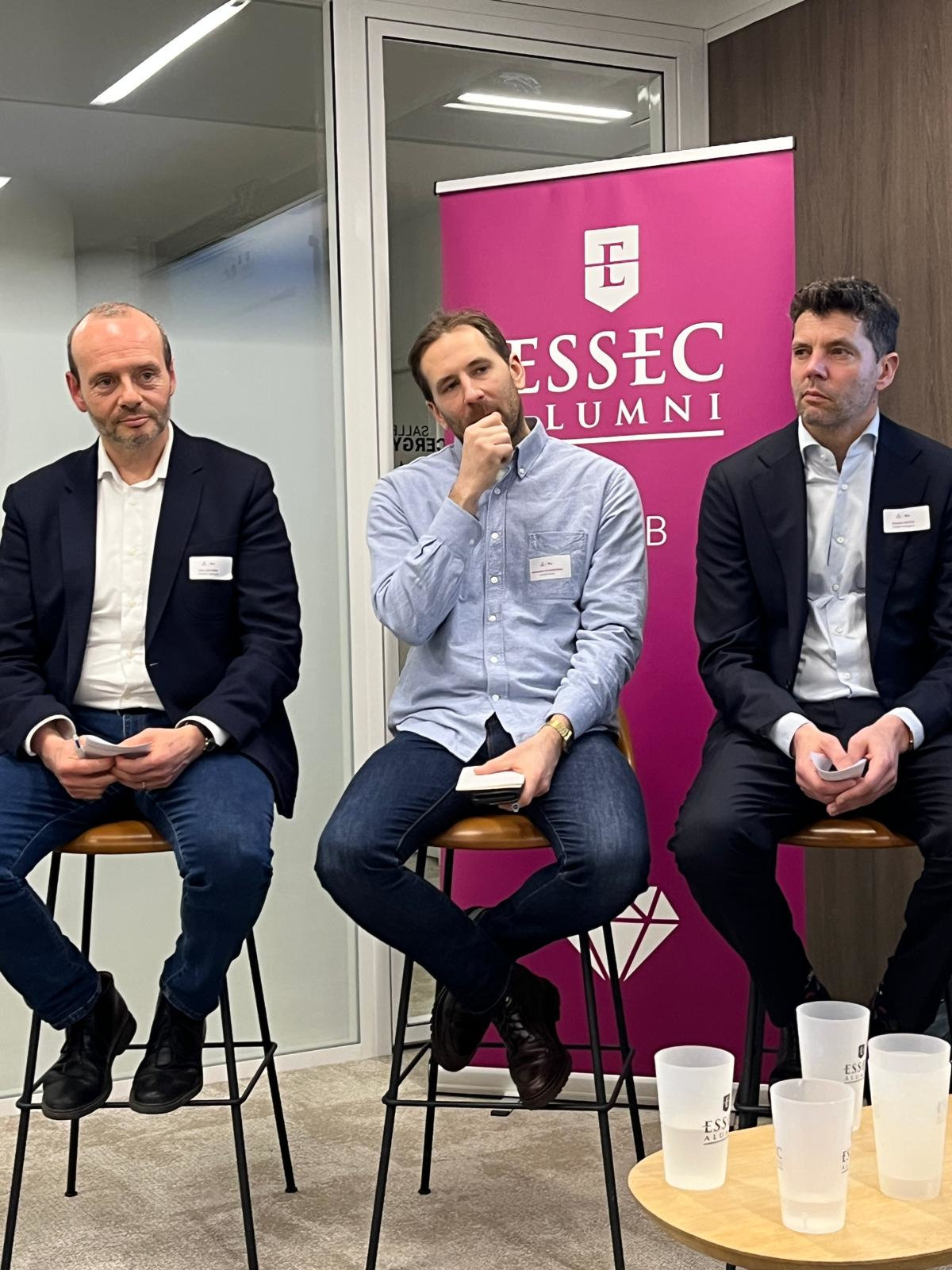


Intervention by Romain MOYSE – CARTIER HORLOGERIE
Romain Moyse is an engineer and has 20 years of experience in luxury product development. He holds 26 patents. He currently leads the “Product Innovation” division at Cartier Horlogerie, where he focuses on inventing and developing savoir-faire to serve the Maison’s creativity and design.
His role, and what drives him, is creating beautiful objects that will leave a mark on history. Maison Cartier loves to revisit the heritage of historical pieces, play with materials, and develop or transform savoir-faire. Designers discover innovations (sometimes created for other industries) and adapt them to craft exceptional pieces, or they develop their own technologies. A key example is the creation of the “Coussin” collection of flexible watches. Cartier used new 3D printing technology to create a gold mesh (akin to chainmail) and adapted this technique for the “Coussin” watches. They invented a new gesture : setting flexible gold.
For Romain, innovation must have meaning — it serves Beauty. It is about developing new savoir-faire, new techniques. It is also about allowing oneself to make mistakes and taking the time to refine processes. He shared his upcoming challenges : training the next generation of artisans, rethinking materials for sustainability, and transforming creative professions in response to emerging technologies, including AI, which is reshaping creative practices.
To know more